
Screening & intake
Raw-water intake, screening and initial pump control.
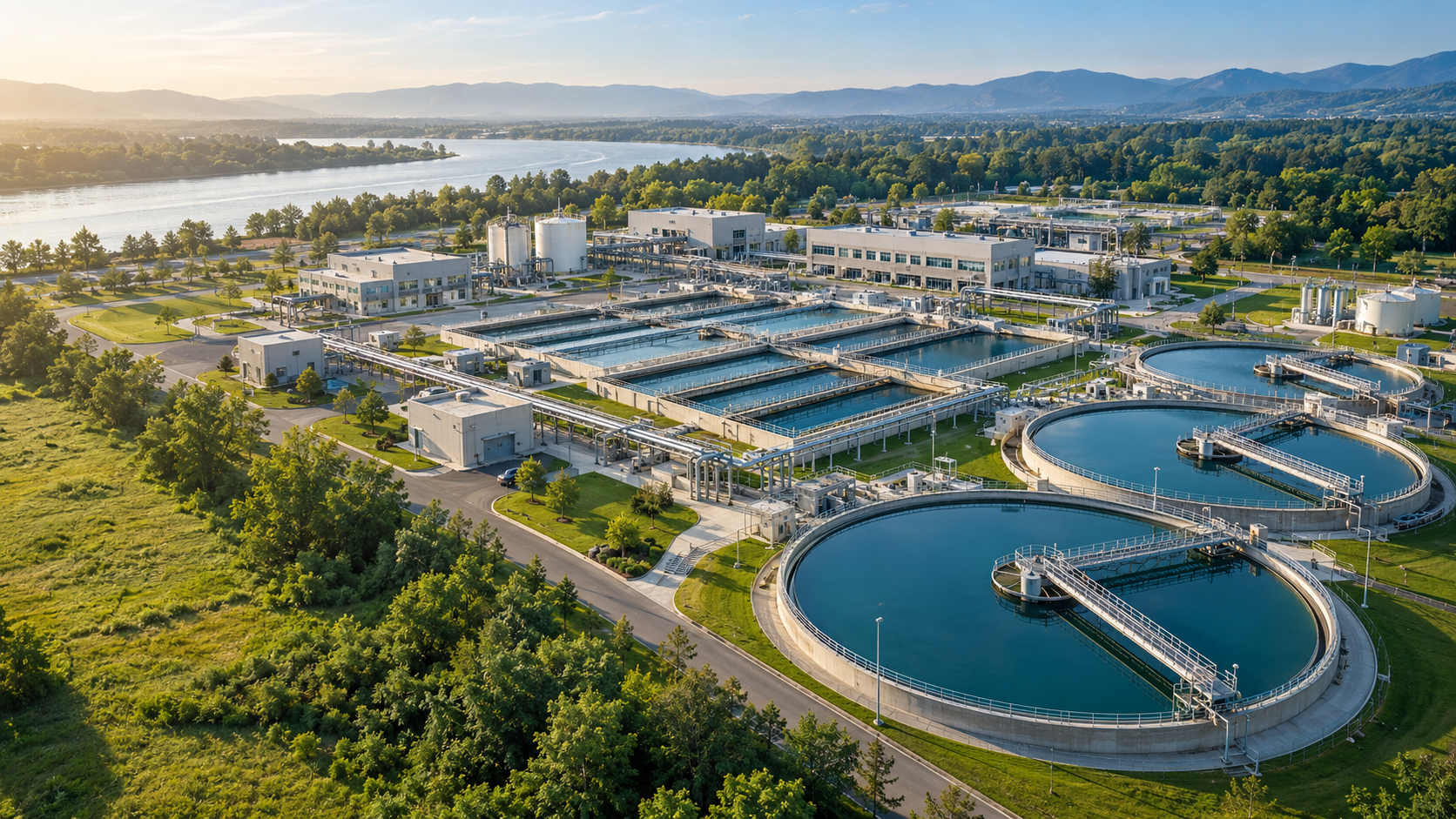
Water Treatment
Automation spare parts for drinking-water, industrial-water and wastewater treatment plants—from intake and filtration to chemical dosing, membrane systems and discharge.
The treatment path
Water-treatment automation coordinates pumps, valves, blowers, mixers, dosing systems and quality instruments. The exact replacement depends on the process stage and installed control platform.
Raw-water intake, screening and initial pump control.
Chemical dosing helps suspended particles gather.
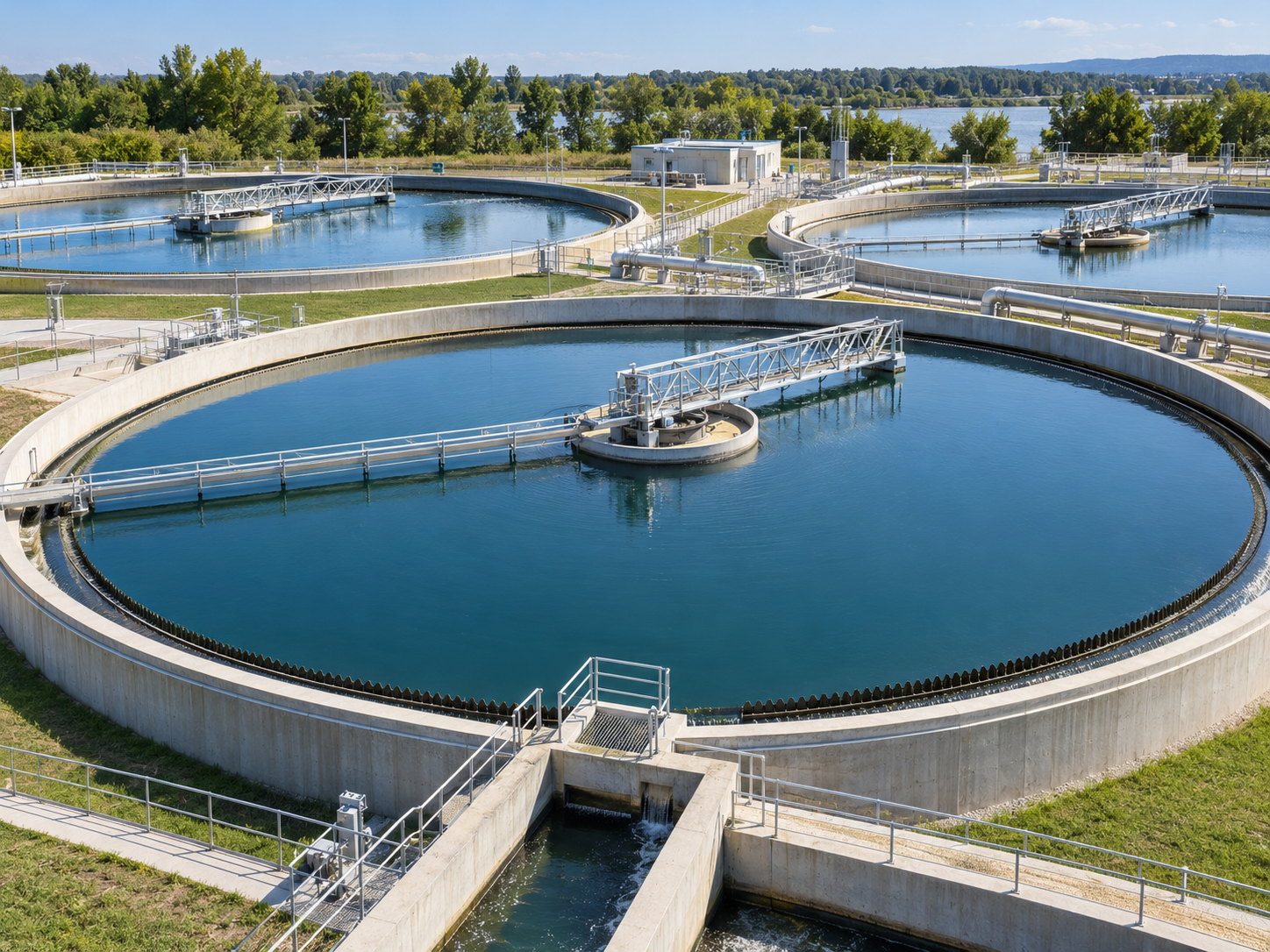
Settling tanks separate solids before filtration.
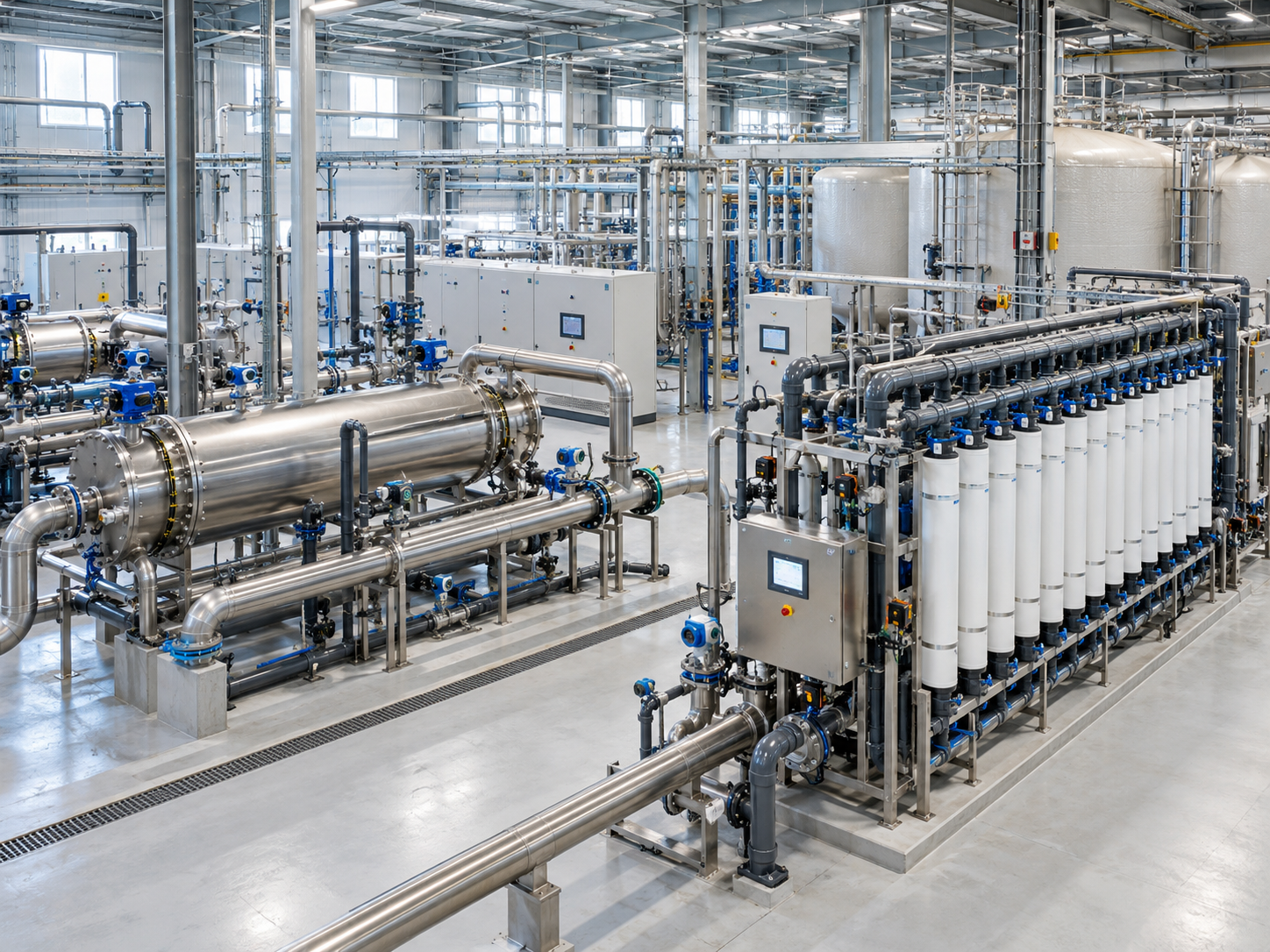
Filters, membranes and backwash sequences improve water quality.
Treated water is stored, monitored and sent to users or reuse systems.
Where water-treatment spare parts are used
Water, wastewater and industrial-process plants use different process designs, but the control principle is similar: field instruments send measurements to a PLC or DCS, and outputs adjust pumps, valves, drives and dosing equipment.
| Application | What the automation system does | Typical spare parts |
|---|---|---|
| Intake, supply and drainage | Controls pump starts, stops and speed according to level, pressure or flow. | PLC, I/O modules, VFDs, level sensors and pressure sensors |
| Chemical dosing | Adjusts dosing quantity according to water flow, quality measurement and process recipe. | Analog modules, metering-pump controllers, pH and residual-chlorine analyzers |
| Filtration and backwash | Monitors differential pressure, sequences valve switching and starts the backwash pumps. | Differential-pressure sensors, PLC modules and valve actuators |
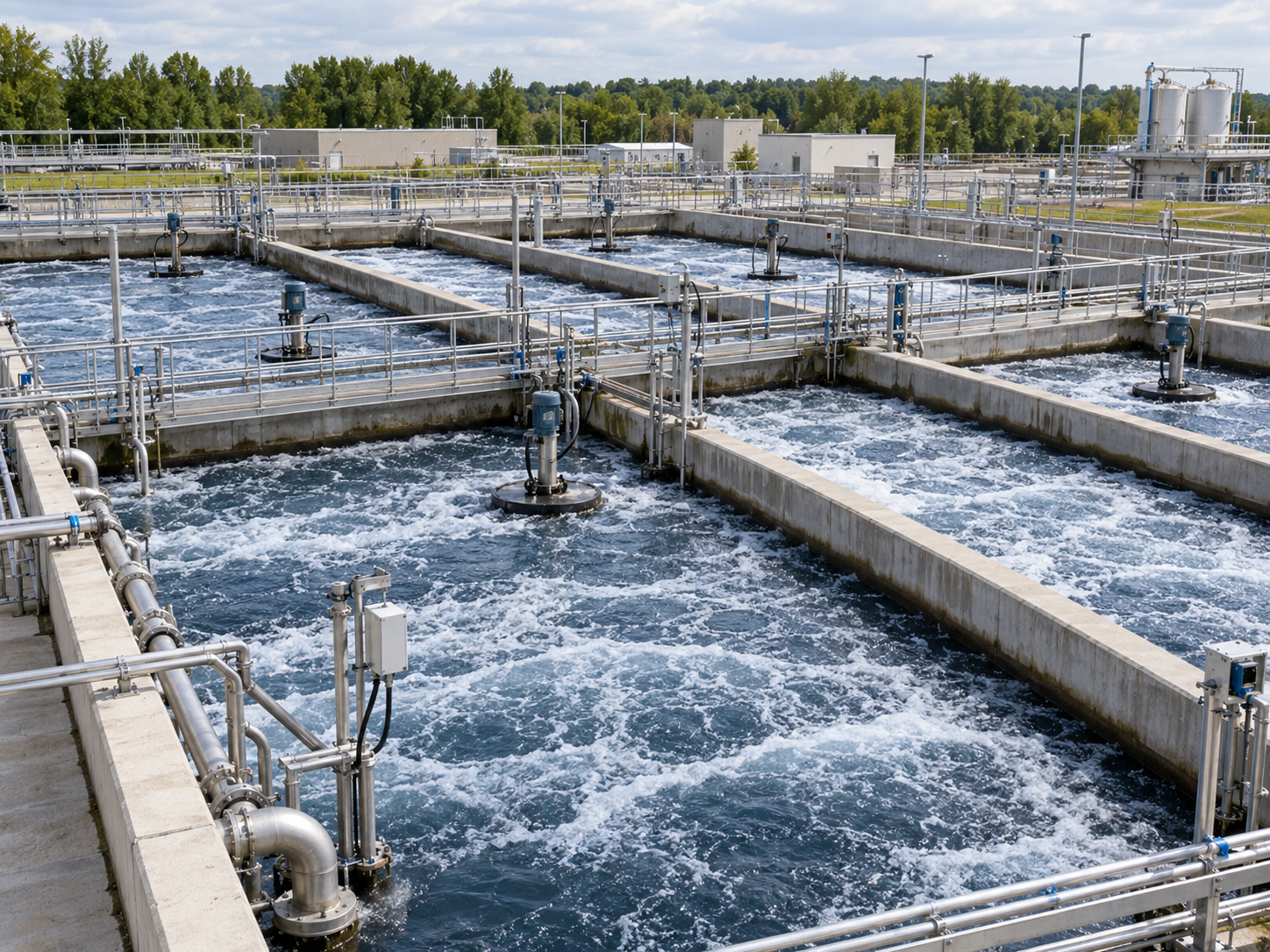
| Biological wastewater treatment | Adjusts aeration according to dissolved oxygen and controls mixing and return sludge. | Dissolved-oxygen instruments, controllers, VFDs and I/O modules |
| Reverse-osmosis systems | Controls high-pressure pumps and flushing sequences while monitoring pressure, flow and conductivity. | PLC, VFD, pressure sensors and conductivity instruments |
| Central monitoring and alarms | Displays equipment status, records water-quality data and reports abnormal conditions. | HMI, industrial PCs, communication modules and industrial switches |
Water pressure drops as demand increases. A pressure sensor sends the signal to the PLC, the controller compares it with the setpoint, and a variable-frequency drive adjusts pump speed to maintain stable pressure.
Differential pressure or elapsed runtime starts the sequence. The PLC closes the normal-flow valves, starts the backwash pump, changes valve positions and returns the filter to service after the approved cycle.
Closed-loop treatment control
Controllers do not work alone. Sensors, input modules, programs, output modules and pumps or valves form a complete loop.
pH, conductivity, turbidity, flow, pressure, level, dissolved oxygen and temperature.
PLC or DCS compares the measurement with the setpoint and treatment recipe.
Output modules control dosing pumps, VFDs, blowers, mixers and valves.
HMI, SCADA and historian records show trends and abnormal conditions.
Procurement guide
A technically similar module may still be incompatible with the installed program, signal type or network.
Intake, filtration, RO, dosing, aeration, disinfection, sludge or discharge.
Include CPU, I/O, power supply, communication, firmware and hardware revision.
4–20 mA, pulse, digital status, conductivity, pH, pressure or another field signal.
Remote station, emergency repair, delivery date, preferred condition and documentation needs.
Model starting points
| Brand | Common series | Typical water-treatment use |
|---|---|---|
| Schneider Electric | Modicon M340/M580, X80 I/O, Altivar | PLC, remote I/O, drives and process control for pumping, filtration and wastewater systems. |
| Siemens | S7-1200, S7-1500, ET 200, SINAMICS | Pump stations, chemical dosing, filtration, aeration and distributed plant control. |
| Rockwell Automation | ControlLogix, CompactLogix, POINT I/O, PowerFlex | PLC, safety, remote I/O and drives for municipal and industrial water plants. |
| ABB | AC500, S800 I/O, AC800M, ACS880 | Process-control modules, pumps, remote stations and water-utility communication. |
| Emerson | DeltaV controllers, CHARMs I/O, PACSystems | Industrial wastewater, process instrumentation and plant-wide supervisory control. |
| Bently Nevada | 3500/15, 3500/22M, 3500/40M | Condition monitoring for high-value pumps, blowers, centrifuges and other rotating equipment. |
Questions before ordering
It converts continuous signals such as pH, conductivity, pressure, flow or level—often through a 4–20 mA instrument loop—into values used by the controller.
The instrument measures water quality, the PLC compares it with the target, and an analog output adjusts the dosing pump or control valve.
Not automatically. Confirm voltage, signal type, firmware, network, program compatibility and the approved plant configuration.
Send the complete model number, treatment stage, quantity, destination, condition preference, required date and available documentation.
Water-treatment requirement
Send the model number, equipment name, quantity and maintenance timing.